
 Article
 Brochure
 Executive Resource
 Insight Hub
 Ext. Publication
 Video
VideoOut of Land, Not Out of Opportunity: The Economics of Adaptive Reuse in Southern California

Never miss a thing.
Sign up to receive our insights newsletter.
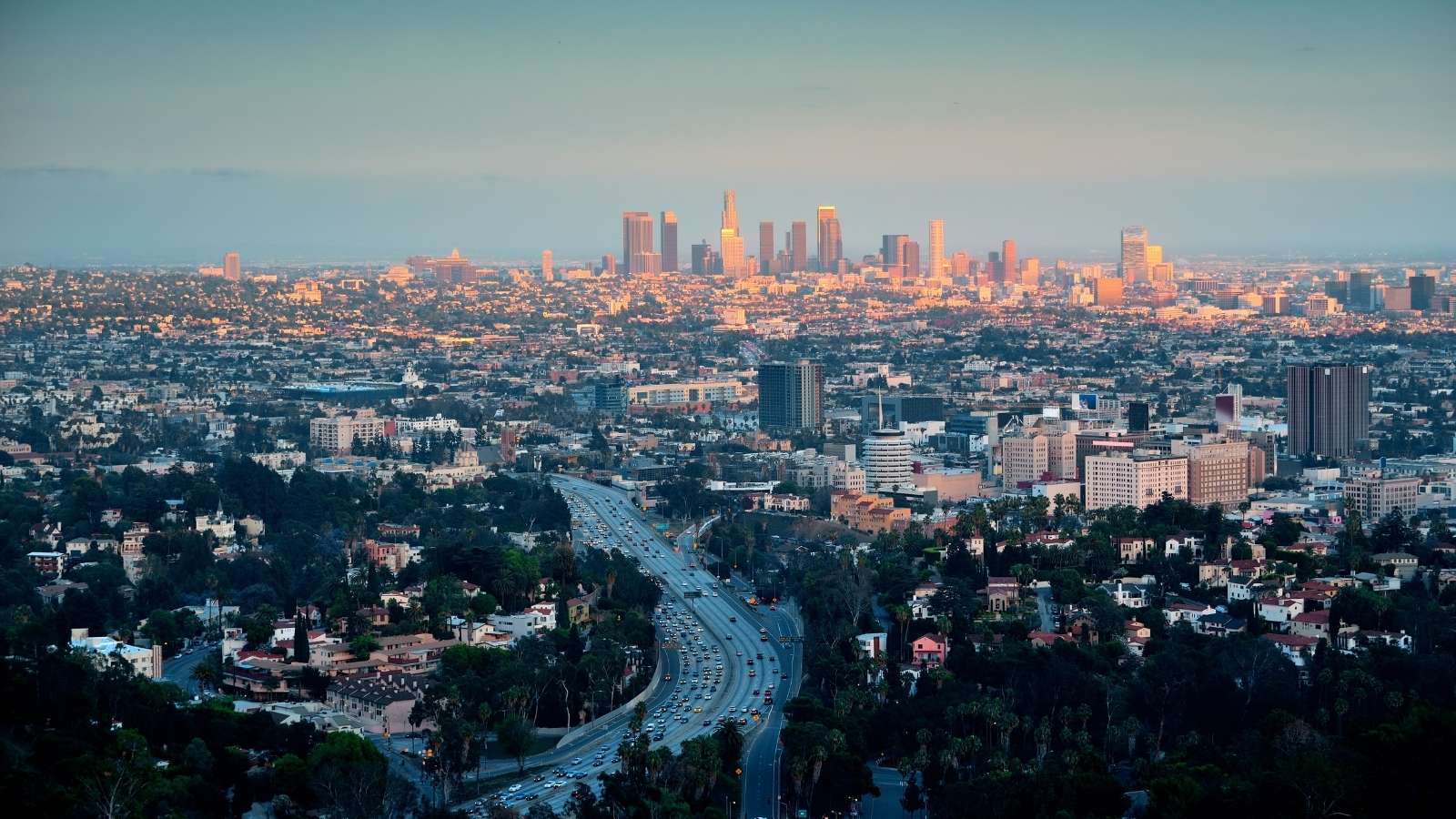
Southern California isn’t Texas, where growth can stretch outward for miles, and new apartments seem to rise in every direction. Here, the region is bounded by the Pacific Ocean, protected hillsides, fully built-out suburbs, environmental constraints and increasing resistance to sprawl. The traditional model of “buy dirt and build” is no longer as simple or as scalable as it once was. And yet, the housing shortage remains very real.
Given the widely acknowledged need for additional housing across Los Angeles and the broader Southern California region, the logical conclusion is simple: If we can’t build outward, developers must build upward or look to adaptive reuse as a practical alternative to traditional ground‑up construction.
What Is Adaptive Reuse and Why Now?
Adaptive reuse refers to the conversion of existing nonresidential buildings — office, retail, hotel or industrial — into multifamily housing. This concept isn’t new. Downtown Los Angeles saw a wave of conversions in the early 2000s. Those projects demonstrated that under the right conditions, existing buildings could be repositioned to meet housing demand without relying on new land. Today, what sets the market apart is the scale and urgency of the opportunity.
Southern California is facing:
- Persistent housing undersupply
- Elevated office vacancy rates
- A reset in commercial real estate valuations
- Shifting demographic preferences toward urban, walkable communities
Against that backdrop, the recently enacted Citywide Adaptive Reuse Ordinance in Los Angeles effectively gives the green light for large-scale conversions of nonresidential buildings into multifamily housing across much of the city.
Adaptive reuse is not a guaranteed win. History shows that when developers overpay, overleverage or overestimate exit values, conversions can destroy equity just as quickly as ground-up development. The opportunity exists for disciplined operators who approach these projects with rigor, realistic assumptions and respect for execution risk.
The Economics: Can the Numbers Actually Work?
One big question is: Can developers really make money doing adaptive reuse projects? The answer, like many things in real estate, is that it depends. Project feasibility hinges on acquisition pricing, construction costs and the ability to achieve sustainable rents once the property stabilizes.
Basis Is Everything
With office values having reset meaningfully in the last few years, acquisition basis is dramatically different than it was in 2019. For many investors, this reset has reopened conversations that would have been uneconomic just a few years ago.
If a developer can:
- Acquire an underperforming office asset at a steep discount
- Secure entitlements under the new ordinance
- Control construction costs
- Achieve stabilized rents supported by strong housing demand
Then adaptive reuse can become financially viable. At the same time, it is not a low-execution risk strategy.
Conversions often involve:
- Structural retrofits
- Seismic upgrades
- Mechanical, Electrical and Plumbing (MEP) reconfiguration
- Window and light compliance issues
- Code upgrades that effectively make the project “new construction in disguise”
In other words, these projects require significant capital, sophisticated underwriting and disciplined execution.
Regulatory Tailwinds: A Rare Moment of Alignment
There are several macro factors creating a potentially favorable window for adaptive reuse in Los Angeles and the broader Southern California market:
1. The Citywide Adaptive Reuse Ordinance
By reducing entitlement friction and expanding eligibility for conversions, the ordinance materially shortens timelines and reduces political uncertainty. Historically, entitlement uncertainty has been one of the largest soft-cost risks in Los Angeles development. Under the original 1999 Adaptive Reuse Ordinance, conversions were largely limited to buildings constructed before 1974 and located within specific areas such as downtown, Hollywood, Koreatown and Chinatown. In contrast, the new Citywide Adaptive Reuse Ordinance expands eligibility across all of Los Angeles, allowing buildings that are at least 15 years old to qualify for streamlined, largely by-right residential conversion.
Time is money in real estate. In this environment, entitlement certainty may be even more valuable.
2. Murmurings around Measure ULA reform
Measure United to House LA (known as Measure ULA and informally referred to as “the mansion tax”) has added friction to high-value transactions in Los Angeles. There are growing discussions around potential reform or repeal. If transaction friction is reduced, liquidity improves. And liquidity is like oxygen for development markets. It supports price discovery and project financing, both critical to development activity.
3. Institutional capital is watching again
For the past 18-24 months, much institutional capital stepped to the sidelines in Southern California. Rising rates, political risk and transaction taxes dampened enthusiasm. Recently, however, there are signs that capital is cautiously reengaging, including:
- Funds seeking distressed office opportunities
- Capital looking for differentiated housing plays
- Investors betting on long-term Southern California fundamentals
Capital tends to return before headlines do. When it senses dislocation and policy alignment, it moves.
Demand Has Never Been the Problem
Despite cyclical volatility, one thing has remained constant — demand for housing in Southern California continues.
People want to live in this area for many reasons:
- Climate
- Job diversity across tech, media, health care, logistics and entertainment
- Global connectivity
- Lifestyle amenities that are difficult to replicate elsewhere
As long as these fundamentals continue to attract residents and employers, housing will be required. Development activity has historically responded to this demand, and sustained demand ensures that developers will continue to seek ways to produce housing.
The Real Risk: Execution, Not Concept
Adaptive reuse is not a silver bullet. Not every obsolete office building is a good candidate for conversion, and not every project will clear today’s capital stack hurdles.
Execution, rather than concept, is the primary risk. The broader thesis is compelling:
- Greenfield land is largely unavailable in Southern California.
- A structural housing shortage persists.
- Significant underutilized commercial inventory exists.
- Regulatory frameworks now support conversions.
- Capital is beginning to thaw.
- Political headwinds appear to be moderating.
In that environment, adaptive reuse is not just a niche strategy. For disciplined developers and investors, it may become a core development model for the next decade.
Can Developers Make Money?
Yes, but only if they:
- Buy right
- Underwrite conservatively
- Control construction risk
- Structure capital intelligently
- Move quickly within the regulatory window
Adaptive reuse rewards sophistication. Projects with insufficient underwriting or unrealistic assumptions can fail quickly.
With sustained housing demand across Southern California, the market will continue to search for ways to produce housing. That persistent demand pressures developers and investors to explore options beyond traditional ground‑up construction. This dynamic helps explain why adaptive reuse is increasingly viewed as one of the region’s more compelling housing opportunities.
Weaver Can Help You Assess Adaptive Reuse
With Southern California’s housing shortage and underutilized commercial inventory, timing and precision are critical for successful conversions. Adaptive reuse can be competitive when basis, scope and underwriting align.
Weaver helps stakeholders quickly assess feasibility, including entitlement pathways, building constraints, order-of-magnitude costs and rent support. Considering a conversion? Contact us today to schedule a brief feasibility discussion.
©2026
